smart telescope for planets buying guide

Why our overall top pick isn't the one to grab for Jupiter and Saturn

For planets, focal length beats aperture -- and that changes the ranking

Our overall #1 has the biggest mirror in the lineup but a wide-field design built for galaxies, not planets. Here's which smart telescope actually gets you the most detail on Jupiter and Saturn.

See the planet-viewing picks

Quick answer: Our top pick for smart telescope for planets is the Unistellar eQuinox 2 Smart Telescope (Best for Planets). If you're looking for best telephoto reach, the DWARFLAB Dwarf 3 Smart Telescope is a strong alternative.

Why our overall #1 isn't the pick for planets

Reviewed by the StarLoupe team · last updated 2026-08-29

None of the smart telescopes in our main lineup are built as dedicated planetary instruments -- that job belongs to long-focal-length telescopes paired with high-frame-rate planetary cameras, which will out-resolve any live-stacking smart scope on Jupiter or Saturn. What these five scopes can do is vary a lot from each other on how big and detailed a planet looks before you start cropping the image, and that comes down to focal length far more than aperture.

That's why the Celestron Origin Mark II -- our overall Best Overall pick, with the largest 6-inch (152mm) mirror in the lineup -- doesn't show up here. It's built around a fast f/2.2 RASA optical design with a short 335mm focal length, meant to frame wide swaths of a galaxy or nebula in one shot. A short focal length spreads a small, bright target like Jupiter over fewer pixels, so the Origin's size advantage doesn't translate into planetary detail.

The Unistellar eQuinox 2's 450mm focal length is the longest of the group, and Unistellar markets its Enhanced Vision processing as tuned partly for planetary targets rather than only faint deep-sky ones. The DWARFLAB Dwarf 3 is the surprise runner-up: its telephoto lens crops down to an effective 737mm despite a much smaller 35mm aperture, trading light-gathering for reach in a 3-pound travel body.

Focal length decides how big a planet looks, not aperture alone

A wider mirror gathers more light, which helps with faint galaxies and nebulae, but a planet is already bright -- what makes it look bigger and more detailed in the frame is focal length. That's why the 450mm eQuinox 2 shows more Jupiter detail than the wider-apertured but 335mm Origin.

Check the effective focal length after sensor crop, not just the optics spec

The Dwarf 3's telephoto lens is physically 150mm, but its small sensor crops that down to an effective 737mm -- longer reach than the eQuinox 2's native 450mm despite far less light-gathering aperture. Always look for the effective, post-crop number when comparing smart telescopes for planets.

Product Best For Price Rating
Unistellar eQuinox 2 Smart Telescope Best for Planets $2,199 - $2,799 4.7/5
DWARFLAB Dwarf 3 Smart Telescope Best Telephoto Reach $519 - $599 4.6/5
ZWO Seestar S50 All-in-One Smart Telescope Honest Budget Pick $479 - $529 4.7/5
Best for Planets

Unistellar eQuinox 2 Smart Telescope

4.7

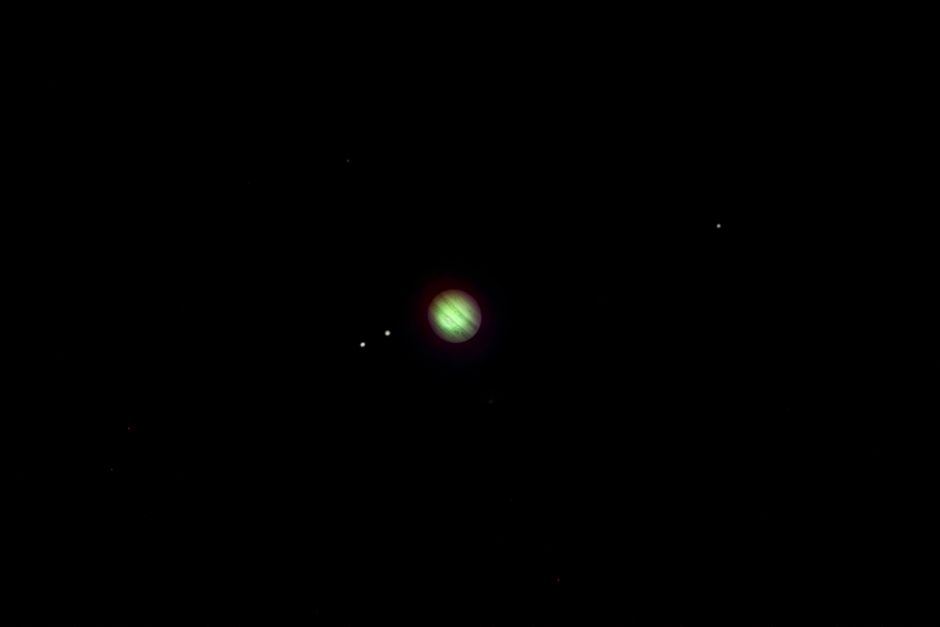
A 114mm, f/4 telescope with a 450mm focal length -- the longest of any scope in our full lineup -- paired with Enhanced Vision live-stacking that Unistellar tunes to pull out Jupiter's cloud bands and Saturn's ring gap, not just faint deep-sky targets.

  • 450mm focal length is the longest in this lineup, so Jupiter and Saturn render larger before you crop in
  • Enhanced Vision stacking is tuned to resolve cloud bands and ring detail, not just nebula glow
  • Starting around $2,199, it costs roughly 4x the Dwarf 3 for that extra reach
Best Telephoto Reach

DWARFLAB Dwarf 3 Smart Telescope

4.6

The telephoto one of its two built-in lenses crops down to an effective 737mm focal length despite a compact 35mm aperture -- more reach than every scope here except the eQuinox 2, in a 3-pound body.

  • 737mm effective focal length on the telephoto lens beats the 450mm eQuinox 2 on paper reach
  • Switches to the wide-angle lens for the Milky Way in the same session, no gear swap
  • 35mm aperture gathers far less light than the eQuinox 2's 114mm, so planetary frames look dimmer and noisier at full crop
Honest Budget Pick

ZWO Seestar S50 All-in-One Smart Telescope

4.7

A 50mm, f/5 scope with a 250mm focal length -- the shortest in this comparison -- so treat it as the cheapest way to point a smart telescope at a planet, not a way to see cloud bands or ring detail.

  • Cheapest entry point in this comparison to point a smart telescope at Jupiter or Saturn, starting near $479
  • Same one-button setup that makes it the easiest scope in our full lineup to learn on
  • 250mm focal length is the shortest here, so planets stay a small bright dot even after cropping in
⚡ Limited-time perk

Free two-day delivery on your pick

Get your pick delivered fast -- try Amazon Prime free for 30 days.

Sponsored link -- we may earn a fee if you sign up. No extra cost to you.

Frequently Asked Questions

Can any smart telescope actually show Jupiter's cloud bands or Saturn's rings clearly?

To a degree, yes -- the Unistellar eQuinox 2's 450mm focal length and planet-tuned Enhanced Vision processing resolve cloud banding and the ring gap better than the shorter-focal-length scopes in our lineup, but none of these match a dedicated long-focal-length planetary setup.

Why isn't the Celestron Origin, your overall Best Overall pick, on this planet-focused list?

It has the largest aperture in our lineup at 6 inches, but it's a fast f/2.2 RASA design with a short 335mm focal length built for wide-field deep-sky framing. That short focal length works against it for planets, where a longer focal length shows more detail on a small, bright target.

Which scope in your lineup has the longest reach for planets?

The Unistellar eQuinox 2, at a native 450mm focal length. The DWARFLAB Dwarf 3 comes close on paper with a 737mm effective focal length after sensor crop, but its much smaller 35mm aperture means dimmer, noisier images at that crop level.

Is the ZWO Seestar S50 worth buying if I mainly want to look at planets?

Only if budget is the priority. Its 250mm focal length is the shortest in this comparison, so Jupiter and Saturn stay small even cropped in tight. It's a reasonable low-cost way to start, not a scope chosen for planetary detail.

View our top pick →